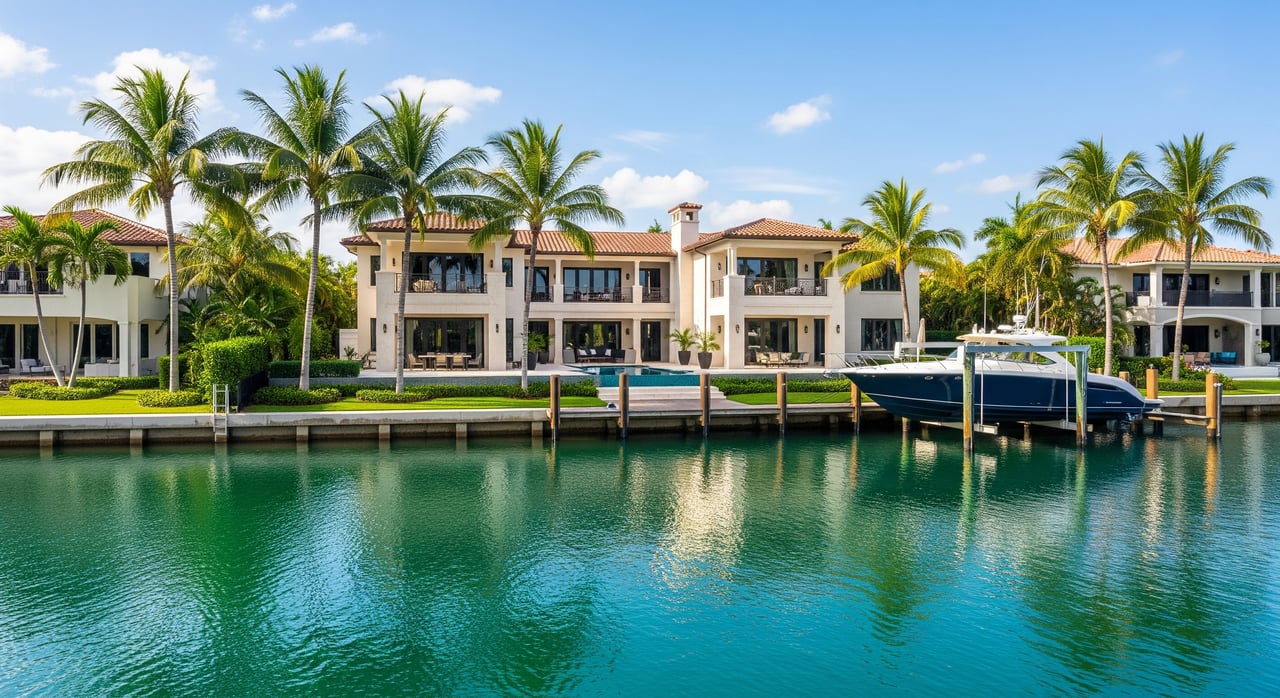
Two homes can sit on the same canal in Boca Raton and list at very different prices. If you have ever wondered why, you are not alone. Waterfront pricing rewards the details you see, and the ones you do not. In this guide, you will learn what truly moves the number in Boca Raton and coastal Palm Beach County, how to compare properties, and where to verify the facts that matter. Let’s dive in.
What “waterfront” means in Boca Raton
Not all water is priced the same. In Boca Raton and the broader Palm Beach coast, the type of water and the access it provides are core price drivers.
- Oceanfront: Scarce and usually the highest premium. Direct beach frontage, unobstructed Atlantic views, and privacy command top value. Elevation and dune ownership also matter.
- Intracoastal Waterway: Highly desirable for boaters, especially with deepwater dockage that can handle larger vessels. Dock length and water depth at mean low water influence price.
- Canals and lakes: Wide, navigable canals with clear paths to the Intracoastal can trade near ICW premiums. Narrow or shallow canals, or man-made lakes without ocean access, carry smaller premiums.
- Access rights: A deeded private dock or slip is a material value add. Community docks or view-only properties typically price lower.
Lot and water-side features that drive price
Waterfront value often starts with the lot and the water interface, not the house.
- Frontage and usable dock length: Linear front-footage is a common valuation input along the coast. More usable dock length that can accommodate a larger boat can raise value.
- Water depth and bridge clearance: Shallow approaches or low bridges that limit boat size reduce buyer demand from serious boaters and can lower price relative to deepwater routes.
- Seawall and dock condition: Permitted, well-built seawalls and docks add value. Failing or unpermitted structures pull values down, because replacement can run from the tens of thousands into the low hundreds of thousands depending on length and condition.
- View quality and orientation: Unobstructed wide-water or open-ocean views sell for more than tight canal views or outlooks blocked by nearby structures. Sunset or wide-basin exposures often see stronger demand.
- Elevation and flood position: Higher sites relative to Base Flood Elevation can mean lower flood premiums and less perceived risk. Verify flood placement with official FEMA Flood Map Service Center data and an elevation certificate.
Construction, age and code compliance
Florida’s coastal code improvements changed how buyers price risk. Newer homes built to modern codes often command premiums because they are designed for stronger wind and flood resistance.
- Code cycles: Significant updates after 2001 improved wind mitigation standards. Post-2010 cycles further raised the bar on roofs, impact glazing, and structural performance.
- Retrofits: Older homes without impact windows, reinforced doors, or elevated living areas tend to sell at a discount. Buyers often factor the cost of upgrades into offers.
- Rebuild calculus: On very high-value parcels, especially oceanfront, some buyers price land and replace or majorly renovate. Appraisals may lean on cost-to-build and mitigation estimates.
Amenities, property type and community rules
Lifestyle features and property form also shape price and marketability.
- Private amenities: Beach access, pool with water views, guesthouse, elevator, multiple garages, and boat lifts increase buyer willingness to pay.
- Single-family vs condo: Single-family estates and waterfront condos trade on different variables. For condos, assignable slips, marina fees, HOA slip policies and rental restrictions are central to value.
- Gated communities: Security, private marinas, and shared recreation can add a community premium compared with standalone parcels.
Environmental and insurance factors that move numbers
Coastal ownership comes with regulatory and risk details that directly affect pricing and carrying costs.
- Flood zones and insurance: If a property falls in a Special Flood Hazard Area, lenders typically require flood insurance. Confirm status on the FEMA Flood Map Service Center, and review an elevation certificate during due diligence.
- Coastal permitting: In Florida, work seaward of the Coastal Construction Control Line may require state permits. Lack of proper permits can limit repairs or improvements and reduce value. Review the Florida DEP Coastal Construction Control Line guidance before planning coastal work.
- Sea-level and chronic flooding risk: Long-term projections shape lender and buyer sentiment. You can explore local scenarios with the NOAA Sea Level Rise Viewer.
- Local water management: Canal levels, dredging and navigation information are managed regionally through agencies like the South Florida Water Management District. Changes that affect access or water quality can influence value.
- Insurance market dynamics: Premiums and policy availability shift with storms and carrier changes. Many buyers now obtain wind, homeowners and flood quotes pre-offer. Check options through trusted Florida carriers, including the state’s residual market at Citizens Property Insurance.
Market context in Palm Beach County
Pricing lives inside the current market. Along the West Palm Beach, Boca Raton and Delray Beach coastline, several trends shape the numbers you see.
- Scarcity: Ocean and Intracoastal frontage is finite, which supports price resilience over time. Transaction volume still tracks interest rates and confidence.
- Demand profile: The buyer pool includes luxury second-home owners, retirees, relocation buyers from higher-tax states, and international purchasers. Boaters focus intensely on dock features, while luxury buyers can be less sensitive to financing costs.
- Rates and financing: Higher rates can lengthen days on market for top-tier properties. Cash buyers soften that impact.
- Property taxes: Florida has no state income tax, but Palm Beach County property taxes and assessments apply. Use the Palm Beach County Property Appraiser to review millage rates, tax estimates and homestead considerations.
- Data sources: For up-to-date sales trends, monthly stats and pricing color, see the Florida Realtors research and statistics.
How to value a Boca waterfront home
Most buyers and appraisers lean on comparable sales, then adjust for the waterfront features that matter. For waterfront property, the lot and dock often carry more weight than interior finishes.
- Sales comparison: Start with the closest recent waterfront sales that match frontage type, water depth and access, dock capacity, view, lot size and elevation. Adjust for condition and age.
- Price per square foot: Useful for context, but less reliable on the water. Analysts often supplement with value per front-foot or usable dock length.
- Income approach: Works best for condos or investor purchases with reliable rental histories. Account for seasonal occupancy and local rules.
- Cost approach: Helpful for new builds and unique estates. Consider current construction costs, mitigation upgrades and seawall or dock replacement.
Practical valuation checklist
Use this quick framework to size up value and avoid surprises:
- Identify waterfront type and confirm deeded docking rights if claimed.
- Check official maps: FEMA flood map and the county property appraiser parcel.
- Confirm dock length, water depth at mean low water, and bridge clearance on the route to the inlet.
- Request the elevation certificate, current survey, and copies of coastal and building permits.
- Get quotes for homeowners, wind and flood insurance, and estimate annual carrying costs including HOA and seawall maintenance.
- Find the three closest true comparables that match water use and view. Adjust for building condition, permitted structures and elevation.
- Factor in current market context: inventory, days on market and interest rates.
- If selling, assemble your evidence: permits, recent upgrades with invoices, third-party inspections and a professional appraisal.
For sellers: support your list price
Buyers on the water are detail oriented. The best listing packages anticipate their questions and back up the price.
- Provide recent comparable sales and avoid leaning on active listings.
- Share copies of permits, especially for roofs, impact glazing, seawalls, docks, lifts and pools.
- Include a seawall and dock condition report from a marine professional.
- Attach the survey, elevation certificate and any HOA or marina documents.
- Highlight premium features such as unobstructed views, deepwater dockage and private beach access.
Buyer negotiation levers
You can often improve terms or price by putting a dollar lens on deferred or restricted features.
- Seawall or dock remediation costs, including permit requirements and timelines.
- Required mitigation or elevation work to meet current codes.
- Insurance quotes and deductible differences.
- Documented deferred maintenance on high-ticket systems.
- Scarcity of recent true comparables, which can create room for valuation debate.
Diligence timeline and who to hire
Waterfront due diligence is specialized. Build the right team early to protect your position.
- Real estate agent with proven waterfront experience in Boca Raton.
- Licensed surveyor and, for docks, a coastal or marine surveyor.
- Structural engineer and marine contractor for seawall and dock evaluations.
- Appraiser experienced in coastal and luxury properties.
- Insurance broker with Florida coastal expertise for bundled quotes.
- Real estate attorney for riparian rights, easements and permitting issues.
You can also pull public records and permits through the City of Boca Raton Building Permits portal, confirm flood status on the FEMA Flood Map Service Center, review coastal permitting under the Florida DEP CCCL program, explore local sea-level projections with the NOAA Sea Level Rise Viewer, and track regional water management through the SFWMD.
Bringing it all together
Waterfront pricing in Boca Raton rewards access, depth, permits, view and resilience. Oceanfront and deepwater ICW command the highest premiums, but the real difference shows up in the details: usable dock length, bridge clearance, seawall condition and elevation. If you verify those items first, you will compare properties with confidence and move faster when the right home hits the market.
If you want tailored guidance and a clear plan for buying or selling on the water, reach out to Elke Hammer and Domingos Carlos. Schedule Your Private Consultation and get a concierge strategy aligned to your goals.
FAQs
How does Intracoastal pricing compare to canals in Boca Raton?
- Intracoastal lots with deepwater dockage often trade at a premium over most canals, especially when the canal is narrow, shallow or has limited access to the ocean.
What flood zone issues should I expect with Boca waterfront homes?
- Many waterfront parcels fall in FEMA Special Flood Hazard Areas, which typically require flood insurance for mortgages. Confirm status on the FEMA Flood Map Service Center and review the elevation certificate.
Do I need permits to repair or build a dock or seawall in Boca Raton?
- Yes. Coastal and in-water work often requires permits from the city and, if seaward of the CCCL, from the Florida DEP. Unpermitted structures can limit value and complicate sales.
How do insurance costs affect what I can afford on a waterfront property?
- Higher wind and flood premiums increase carrying costs and can cap your target price. Get quotes early from an experienced Florida insurance broker and explore options including the state’s Citizens program when needed.
What is the best way to compare two waterfront listings with different dock setups?
- Start with water depth at mean low water, usable dock length and bridge clearance to the inlet. Then adjust for permitted seawalls, view quality and elevation relative to flood maps.
Are short-term rentals common for Boca waterfront properties?
- Rules vary by community and municipality. Review HOA or condo documents and local ordinances before assuming rental income in your valuation.