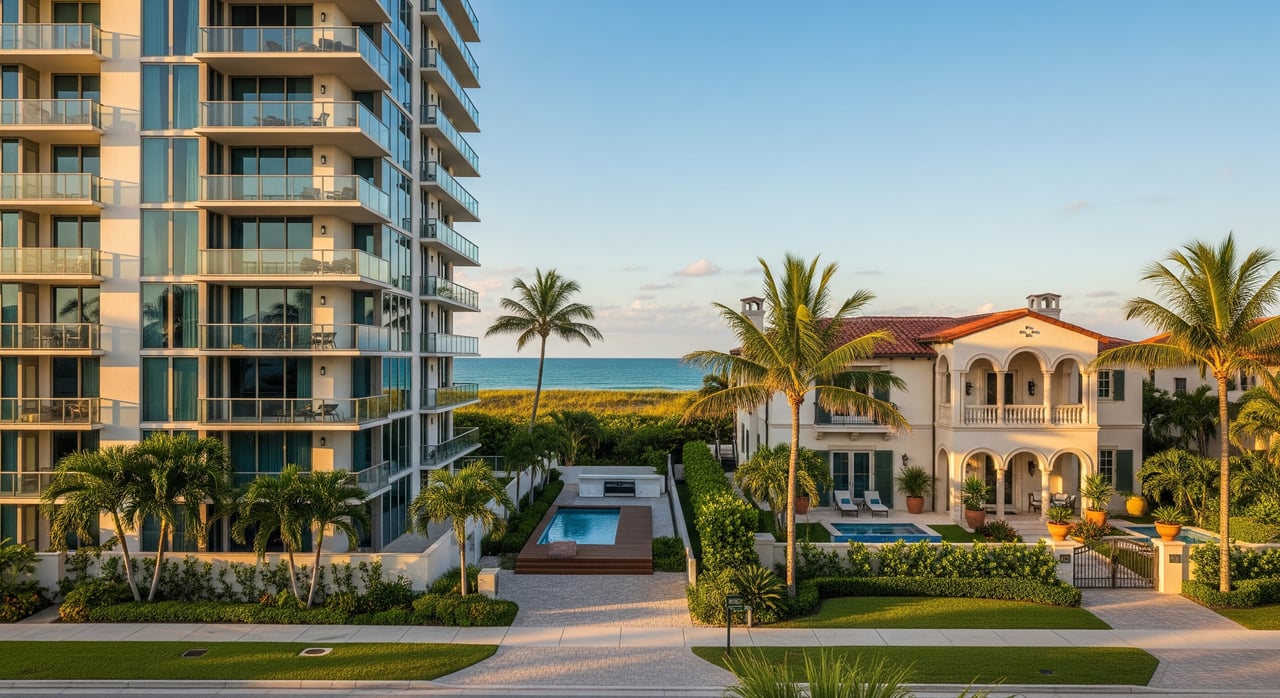
Wondering if a Delray Beach condo or a single-family house fits your life better? You are not alone. In a coastal market with year-round sunshine, beach access, and strong seasonal demand, the right choice depends on how you want to live and what you want to spend each month. In this guide, you will compare costs, lifestyle tradeoffs, insurance and flood factors, financing rules, and resale considerations specific to Delray Beach and Palm Beach County. Let’s dive in.
Condo vs house at a glance
Choosing between a condo and a house in Delray Beach comes down to control, convenience, and location priorities.
- Condos: Best for low-maintenance living, walkability near Atlantic Avenue and the beach, and on-site amenities. Expect monthly association fees and rules that shape how you use the property.
- Single-family homes: Best for privacy, yard space, and full control over your property. Expect more hands-on maintenance and separate costs for lawn, pool, and repairs.
Key takeaway: You trade convenience and amenities in condos for more autonomy and space in single-family homes. Your total monthly cost can be similar depending on HOA fees, insurance, and maintenance.
Cost breakdown in Palm Beach County
Purchase price and total monthly spend
Your monthly budget should capture principal and interest, property taxes, HOA or condo fees, homeowners and flood insurance, utilities, and routine maintenance. In Delray Beach, beachfront and downtown locations command premiums, especially for buildings with strong amenities or newer construction. Inland neighborhoods often deliver more space for the price.
HOA and condo fees
Condo fees cover building insurance for common elements, exterior maintenance, landscaping, and shared services like elevators, security, or on-site management. Fees vary widely. Smaller or limited-amenity buildings may be a few hundred dollars per month. Full-service or luxury beachfront buildings can be much higher, often topping one thousand dollars monthly. Always look at what the fee includes such as water, cable, internet, and reserves.
Single-family homes may have no HOA or a modest one. You will pay separately for yard care, pool service, pest control, roof and exterior repairs, and any upgrades. Budget for routine upkeep and a reserve for bigger items like roof replacement.
Insurance in coastal Florida
Condo owners typically purchase an HO-6 policy for interior finishes and personal property while the association carries a master policy for the building’s structure and common areas. Single-family owners buy full homeowners coverage that includes the structure. In Palm Beach County, windstorm risk and hurricanes make deductibles and carrier availability important. Flood insurance may be required by your lender if the property is in a designated flood zone and is common sense across much of the coast.
Property taxes and special assessments
Property taxes are based on county and city millage rates and assessed values. For condos, also factor in the association’s reserve strategy. If a building has deferred maintenance, owners can face special assessments for major repairs or mandated safety work. Ask for recent budgets, reserve studies, and meeting minutes to gauge risk.
Financing differences
Lenders scrutinize condos more closely than houses. Project approval, owner-occupancy ratios, reserve levels, and any pending litigation can affect eligibility for conventional, FHA, or VA loans. Many single-family homes qualify for standard financing with fewer project-level hurdles. If you plan to use FHA or VA, verify that the condo project meets the program’s requirements before you fall in love with a unit.
Lifestyle and location fit
Walkability and beach access
If you want to park your car and stroll to Atlantic Avenue restaurants, galleries, and the beach, a condo near downtown or the shoreline is appealing. Many buildings offer controlled access, garage parking, and elevator convenience. Inland single-family neighborhoods offer quieter streets, larger lots, and more privacy, often within a short drive of the beach and I-95.
Space, privacy, and pets
Single-family homes come with private yards, room for a pool, and fewer shared walls. That privacy helps with entertaining and outdoor living. Condos share walls and common areas and often have pet, leasing, and renovation rules. Review condo bylaws before you commit, especially if you have pets or plan to remodel.
Amenities and services
Condo amenities can include a pool, fitness center, doorman, security, and on-site management. These add convenience and can be a lifestyle upgrade if you want a lock-and-leave setup. Single-family homes can match some of this with private pools and outdoor kitchens, but you will manage vendors and maintenance schedules yourself. Some gated communities offer shared amenities with an HOA fee.
Short-term rental potential
Delray Beach draws strong seasonal demand, but rental rules vary by city ordinance and by association. Many buildings restrict or prohibit short-term rentals to protect residents. Never assume a unit can be rented. Confirm city rules and the condo’s rental policy if income is part of your plan. The same applies to single-family homes within HOAs.
Risk, flood, and insurance basics
Flood zones and coastal exposure
Delray Beach is low-lying and exposed to coastal storms and long-term sea-level rise. Flood risk affects both insurance costs and financing. Lenders typically require flood insurance in high-risk zones. Even outside mapped zones, many owners choose coverage as a prudent safeguard.
Master policy vs personal coverage
Condo master policies can be cost effective, especially in larger buildings with professional management. Your personal HO-6 covers what the master policy does not, usually the interior and contents. For single-family homes, your homeowners policy covers the structure and systems. Always review coverage limits, windstorm deductibles, and any exclusions.
Windstorm considerations
Florida carriers may apply separate hurricane deductibles, underwriting limits, or coverage restrictions. Market conditions change often, so obtain quotes early in your search and compare deductibles that could apply after a storm.
Governance and due diligence
What to review for condos
- Declaration, bylaws, and rules to understand renovations, leasing, and pets.
- Budget, reserve study, and insurance certificates to gauge financial health.
- Recent meeting minutes and assessment history to spot upcoming projects.
- Owner-occupancy rates, delinquency levels, and litigation status, which can affect your loan options and resale.
Florida condo governance falls under state law that sets standards for reserves, disclosures, and association practices. For older buildings, verify structural reports and any required safety work.
What to review for single-family homes
- Comprehensive home inspection with attention to roof age, windows, HVAC, and drainage.
- Insurance quotes for homeowners, wind, and flood.
- HOA documents if applicable, including rules and fees.
- Vendor plans for landscaping, pool service, and pest control to estimate monthly upkeep.
Resale and long-term value
Single-family homes often appreciate faster than condos in many markets due to land value and limited supply. That said, well-located condos near the beach or Atlantic Avenue can hold value strongly because walkability and lifestyle command demand. High HOA fees, restrictive rental policies, and deferred maintenance can reduce the buyer pool for some condos. On the flip side, a healthy association with solid reserves and desirable amenities can support pricing power.
Liquidity can differ by season. Condos may have more units on the market at once, while single-family homes vary by neighborhood. Focus on location, building condition, and governing rules to protect your exit.
Buyer scenarios and best fits
- You want a lock-and-leave lifestyle and easy beach access: Choose a condo near downtown or the shoreline. Prioritize buildings with strong reserves and clear rental and pet policies.
- You want privacy, yard space, and room for guests or pets: Choose a single-family home. Budget for lawn, pool, and exterior maintenance.
- You plan to generate short-term rental income: Confirm city and association rules first. If restrictions exist, the strategy will not work, regardless of property type.
- You are downsizing or planning to age in place: Consider an elevator condo with on-site management and accessibility features.
- You are a long-term family buyer: Consider a single-family home with outdoor space and proximity to parks and daily conveniences.
- You want amenities but a careful monthly budget: Target condos with efficient fees and fewer luxury add-ons. Compare total monthly costs against a low-HOA single-family home.
Your next steps in Delray Beach
- Get quotes and numbers. Price out HOA or condo fees, property taxes, homeowners and flood insurance, and utilities for both a condo and a comparable single-family home.
- Review condo or HOA documents. Read bylaws, budgets, reserve studies, insurance certificates, meeting minutes, rental policies, and any litigation disclosures.
- Verify flood zone and elevation. Understand lender requirements and how flood risk affects premiums and long-term costs.
- Confirm loan options. If you plan FHA or VA, verify condo project approval early. For conventional loans, ask about project eligibility and reserve requirements.
- Inspect thoroughly. For condos, hire an inspector experienced with multi-unit buildings. For older structures, consider a roof or structural engineer. For houses, assess roof age, impact windows, and drainage.
- Plan maintenance. For single-family homes, line up lawn, pool, and pest services and set a reserve for big-ticket replacements.
If you want a side-by-side cost comparison for your target neighborhoods, we can prepare a custom monthly worksheet and highlight verified condo projects that match your financing and lifestyle goals.
Ready to see how your lifestyle and budget align with Delray Beach neighborhoods and buildings? Connect with Elke Hammer and Domingos Carlos for private guidance, market-by-market insights, and a tailored tour of the best fits. Schedule Your Private Consultation.
FAQs
What costs differ most between condos and houses in Delray Beach?
- Condos add monthly association fees that cover building insurance and common upkeep, while houses shift those costs to your personal budget for lawn, pool, and exterior maintenance.
How do condo rules affect my use of the property?
- Condo bylaws often govern leasing, renovations, pets, parking, and noise. Review the documents early to ensure the rules fit your plans.
What should I check to avoid condo special assessments?
- Review the reserve study, current budget, recent meeting minutes, and inspection reports. Ask about upcoming projects, prior assessments, and the association’s reserve funding strategy.
Do I need flood insurance in Delray Beach?
- Lenders usually require flood insurance in high-risk zones, and many owners outside mapped zones choose coverage due to coastal exposure and storm surge risk.
Can I use FHA or VA financing for a condo?
- It depends on the project. FHA and VA have specific condo approval standards. Verify project eligibility before submitting an offer.
Which has better resale in Palm Beach County, a condo or a house?
- It depends on location and building health. Single-family homes often appreciate faster, but well-located beach or downtown condos can hold value strongly when amenities and reserves are solid.
Are short-term rentals allowed in Delray Beach condos?
- Many associations restrict or prohibit short-term rentals. Always confirm city regulations and the building’s rental policy before buying with an income plan.