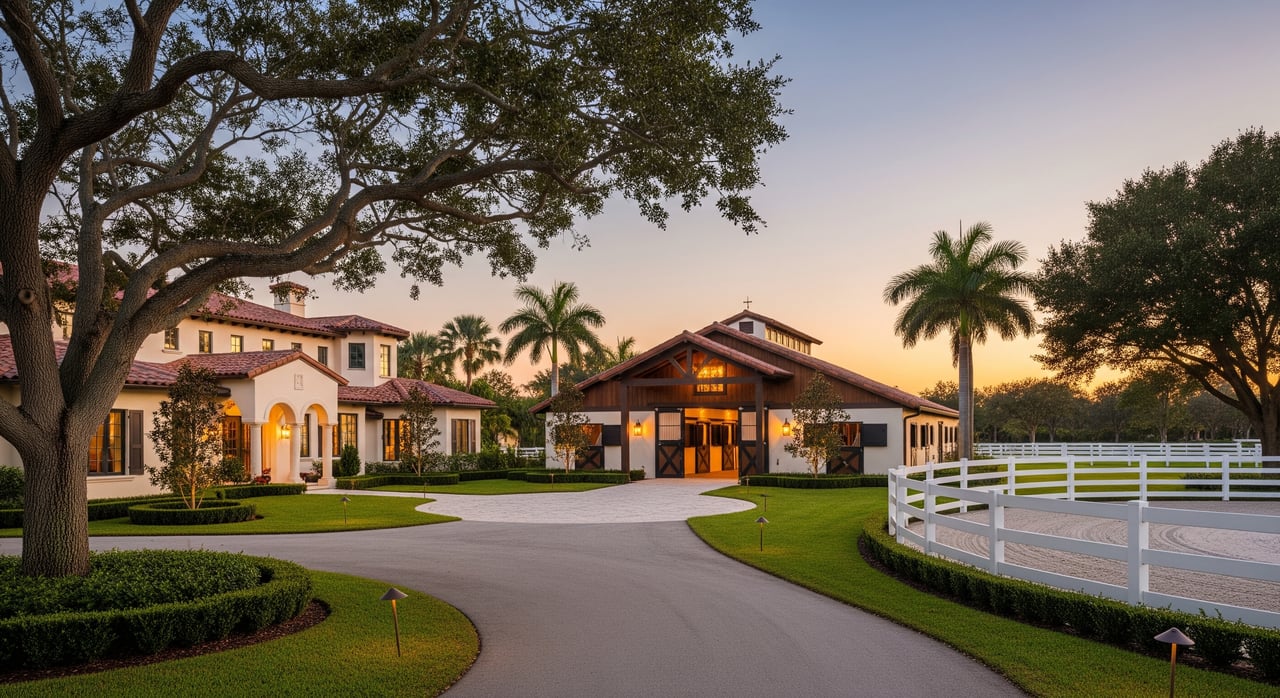
If you are dreaming of a horse-friendly home in Davie, you know the right property can make daily care feel effortless. The wrong layout, drainage, or access can turn even a beautiful acreage into a headache. In South Florida’s heat, humidity, and wet season, the details matter more than ever. This guide breaks down the key features to look for in Davie equestrian homes, plus a practical checklist to help you vet properties with confidence. Let’s dive in.
Why Davie works for horse owners
Davie has a long-standing equestrian culture and a mix of suburban lots and multi-acre estates. You will find properties marketed as horse-ready, but the rules can vary by parcel, HOA, and zoning. Always confirm municipal zoning, deed restrictions, and any HOA or POA covenants before you rely on horse use.
The subtropical climate shapes design decisions. Summers are hot and humid, the wet season can bring heavy rain, and hurricane season is active. A high water table means you should prioritize drainage, ventilation, and hurricane-resistant construction for barns and arenas.
Local regulations also matter. The Town of Davie and Broward County oversee zoning classifications, the permitted number of horses, setbacks for barns, and building permits. Environmental rules cover stormwater, septic or sewer requirements, and manure management. Flood risk can affect both buying decisions and insurance costs, so review FEMA Flood Insurance Rate Maps and Broward County floodplain guidance early.
Barn and stable essentials
Stall size, aisle width, and smart layouts
A comfortable standard stall size is often 12 by 12 feet. Larger horses or broodmares may need 12 by 14 feet or more. Smaller 10 by 10 stalls are sometimes used for ponies, but they are not ideal for daily housing of bigger horses.
Aim for aisles that are at least 10 to 12 feet wide so horses, handlers, and equipment can pass safely. Center-aisle, shed-row, and courtyard barns are all common, and your choice should be driven by airflow, sunlight, and daily workflow rather than style alone.
Ventilation, materials, and moisture control
Good natural ventilation is essential in Davie. Look for cross-ventilation, ridge vents or cupolas, and supplemental fans to reduce humidity and protect respiratory health. Treated lumber and rot-resistant materials hold up better in tropical humidity and termite-prone conditions.
Roof overhangs and gutters should direct water away from foundations and paddocks. A sloped concrete aisle with rubber mats improves safety and cleanup. In stalls, compacted limestone or stone dust topped with rubber mats and bedding helps prevent mud and standing water.
Water, wash racks, and waste handling
Wash stalls should have hot and cold or at least reliable lukewarm water. Drains must connect to an approved sanitary sewer or permitted septic solution. Avoid setups that discharge wash water to pastures or storm drains.
Place hydrants close to arenas and paddocks, and confirm water pressure meets the demands of drinkers and irrigation. Plan a covered manure storage or composting area that prevents runoff and sits away from wells and living spaces, consistent with county guidance.
Safety for fire, lightning, and storms
Create clear egress routes and maintain accessible fire extinguishers. Separate hay and feed storage from stalls, whether by distance or a fire-rated barrier, consistent with local code and insurer guidance. For severe weather, prioritize secure tack and feed storage, robust roof fastening, and a plan for emergency access.
Turnout, pastures, and arenas
Turnout acreage, rotation, and shade
A general rule of thumb in Florida is 1 to 2 acres per horse to help maintain pasture health. Your exact needs depend on forage quality, soil, and management practices. Rotational grazing and parasite control are especially important in warm, rainy climates.
Each paddock should have reliable water access and shade from trees or shelters. Include at least one sacrifice area or dry lot for wet season management to protect your pastures from overuse.
Fencing types and gate widths
Common fencing options in Davie include wood board, painted pipe or steel rail, and safe woven or high-tensile electric with good visibility. Wooden board and pipe fencing look great but require regular upkeep in humidity and termite conditions. Typical fence heights range from 4.5 to 5 feet, and visibility enhancements are smart for acreage near roads.
Gate sizing is critical. Single gates should offer at least 12 to 14 feet of clear width for a truck and trailer. Double gates or 16 to 20 feet openings are better for large rigs and emergency access.
Arena size and footing that drain
Match arena size to how you ride. A small schooling arena is often about 60 by 120 feet. Standard dressage arenas measure 20 by 60 meters, and jump arenas are often larger. In Davie, a properly engineered base with strong drainage is non-negotiable, since poor footing compromises safety and spikes maintenance.
Footing blends can include sand and recycled rubber or other specialty systems designed for drainage. Reliable lighting enables summer evening riding and should be designed to control glare and draw.
Grass species and irrigation
Warm-season grasses such as bermudagrass and bahiagrass are common in Broward County horse pastures. Select species based on grazing tolerance, drought resistance, and traffic tolerance. Irrigation helps during dry spells and supports arena maintenance.
Verify whether the property uses municipal water or a private well and confirm the permitted uses for irrigation and livestock.
Trailer-friendly access and parking
Driveways that work with trailers
Drive design can make or break daily barn life. Pull-through driveways are preferred for frequent trailering. If backing is necessary, plan a level, unobstructed area with a turning radius matched to your trailer length. A practical turnaround or hammerhead often needs about 50 to 70 feet, depending on your rig.
Surfaces should be paved or compacted crushed shell or gravel to prevent bogging in storms. Keep slopes gentle, ideally under 8 to 10 percent, for safe loading and unloading.
Secure, visible entry
Gate systems should operate smoothly and allow large vehicles to pass without scraping or tight turns. Sight lines at the road are important so you can exit safely onto public streets. Confirm emergency vehicles can access all key structures.
Drainage, flood risk, and insurance
Site elevation and stormwater flow
With Davie’s high water table and heavy rain events, drainage is a top priority. Look for grading that moves water away from barns, arenas, and paddocks. Swales, French drains, and properly crowned arenas help prevent standing water.
Gutters and downspouts should direct runoff to appropriate areas that do not erode paddocks or contaminate waterways. Manure storage should be sited to avoid runoff into water bodies and away from wells.
Flood zones, elevation, and premiums
Check FEMA Flood Insurance Rate Maps and Broward County flood guidance to understand a property’s flood zone. Elevation certificates can be important for insurance and resale. Hurricane-resistant roofing, shutters, and strong fastening systems add resilience and can influence coverage terms.
Due diligence checklist for Davie buyers
Property condition and infrastructure
- Barn roof, gutters, structural integrity, termite history, and ventilation.
- Electrical capacity for fans, lighting, and water heaters; water supply and pump.
- Stall dimensions and drainage, aisle construction, mats and bedding compatibility.
- Arena base, footing depth and drainage, lighting and perimeter fencing.
- Fences, posts, and tension; gate widths and latch safety.
- Pasture condition, soil drainage, grass species, shade availability, and signs of erosion or overgrazing.
- Manure storage location and runoff containment relative to wells and water bodies.
- Utilities and services, including municipal versus well water, septic versus sewer, and internet or phone for security and monitoring.
Regulatory, legal, and financial checks
- Zoning and land use, including the permitted number of animals and setbacks for barns and paddocks.
- HOA or POA covenants that may restrict animals, fencing style, or barn construction.
- Flood zone status, required insurance, and potential premium ranges.
- Lender and insurer requirements related to barns, hay storage, and non-residential structures.
Services and lifestyle logistics
- Proximity to equine veterinarians, farriers, hay and feed suppliers, arena-footing contractors, and transport companies.
- Access to local equestrian centers, parks, or trail systems, subject to current rules from the Town of Davie and Broward County.
Documents and records to request
- Barn plans or blueprints, building permits, and maintenance logs for roof, septic, and termite treatments.
- Arena construction specifications and any soil or percolation tests.
- Any elevation certificates and past insurance information, where available.
What to feature in listings or showings
- Stall count and sizes, plus barn amenities like tack room, feed room, and wash stall.
- Arena size and footing type, pasture acreage, and number of paddocks.
- Fence type and condition, gate width, driveway layout and surface.
- Water sources, septic or sewer details, and manure management approach.
- Zoning designation and any known restrictions on horse count or commercial use.
Your edge with concierge representation
Navigating horse properties in Davie calls for both equestrian insight and local regulatory knowledge. You want a team that understands how airflow, drainage, and flood zones translate to comfort, safety, and long-term value. You also deserve polished marketing, clear communication, and a private, high-touch experience.
As a boutique team within Douglas Elliman, we combine neighborhood-level expertise in southern Broward with global reach and a concierge approach that fits how discerning buyers live. From virtual tours and dedicated property pages to multilingual support, we make the process smooth, informed, and tailored to your goals.
Ready to find a Davie property that truly works for you and your horses? Connect with Elke Hammer and Domingos Carlos to Schedule Your Private Consultation.
FAQs
What stall and aisle sizes work best for Davie barns?
- Aim for 12 by 12 foot stalls for most horses, larger for big breeds or broodmares, and 10 to 12 foot aisles for safe movement and equipment.
How many acres per horse should I plan for in Davie?
- Plan for about 1 to 2 acres per horse as a general guideline, then adjust based on pasture quality, rotation, and forage management.
What fencing and gate sizes are recommended for horse safety?
- Common safe options include board, pipe, or visible woven or high-tensile electric fencing, with single gates at 12 to 14 feet and larger double gates at 16 to 20 feet.
Why is drainage such a big deal in Davie?
- The high water table and heavy rain make engineered drainage for barns, paddocks, and arenas essential to prevent mud, protect footing, and reduce health risks.
How should wash racks and manure be managed under local rules?
- Wash stall drains should connect to permitted sanitary systems, and manure storage should be covered and sited to prevent runoff and protect water quality.
What should my driveway include for safe trailer access?
- A pull-through design or a generous turnaround of about 50 to 70 feet, stable surfaces like pavement or compacted gravel, and gentle slopes under 8 to 10 percent.
Which local agencies should I consult before buying?
- Start with the Town of Davie for zoning and permits, Broward County for development and floodplain rules, FEMA flood maps for risk, and UF/IFAS for pasture guidance.